Common Probiotic Strains
When it comes to probiotics, it’s like having a diverse team of microscopic health advocates in your gut. Each strain has its own specialty, working together to keep your digestive system running smoothly. Let’s get to know some of these tiny heroes a bit better:
Lactobacillus Species: The All-Stars
These bacteria are like the popular kids in school – they’re everywhere and for good reason. They’re fantastic at making your gut a hostile place for harmful bacteria.
- L. acidophilus: Think of this as your gut’s bouncer. It helps keep the bad guys out while promoting the growth of beneficial bacteria. It’s also a champion in producing lactase, which is great news if you’re lactose intolerant.
- L. rhamnosus: This is your gut’s globe-trotter. It’s particularly good at surviving the journey through your digestive tract, making it effective at preventing traveler’s diarrhea. Parents, take note – it’s especially helpful for kiddos!
- L. plantarum: Consider this the handyman of your gut. It helps repair the gut lining and can even produce its own natural antibiotics to keep pathogens at bay.
Bifidobacterium Species: The Specialists
These bacteria are like the specialized task force of your gut, each with its own unique skill set.
- B. bifidum: This is your immune system’s personal trainer. It helps prime your body’s defenses and may even help you breathe easier if you suffer from allergies.
- B. longum: Think of this as your gut’s multitasker. Not only does it help with digestion, but some studies suggest it might also help boost your mood. Talk about a gut feeling!
- B. infantis: This is the pediatric specialist of the probiotic world. It’s particularly beneficial for babies, helping to establish a healthy gut flora right from the start. But don’t write it off if you’re an adult – it’s shown promise in easing symptoms of irritable bowel syndrome.
Saccharomyces boulardii: The Maverick
This beneficial yeast is the rebel of the probiotic world. Unlike bacteria, it’s not fazed by antibiotics, making it a great sidekick when you’re on medication. It’s particularly good at fighting off various types of diarrhea, including the dreaded traveler’s diarrhea.
Here’s a handy table summarizing these strains and their primary benefits:
| Probiotic Strain | Primary Benefits |
|---|---|
| L. acidophilus | Supports digestion, enhances immunity, helps with lactose intolerance |
| L. rhamnosus | Prevents and treats diarrhea, especially in children |
| L. plantarum | Reduces inflammation, supports nutrient absorption |
| B. bifidum | Boosts immune system, may help with allergies |
| B. longum | Maintains healthy digestion, may improve brain function |
| B. infantis | Beneficial for infant gut health, may help with IBS |
| S. boulardii | Combats various types of diarrhea, not affected by antibiotics |
Remember, while each of these strains has its own superpowers, they work best as a team. That’s why many probiotic supplements and foods contain a mix of different strains. It’s like assembling your own personal Avengers team for your gut!
When choosing probiotics, don’t be afraid to mix it up. Your gut thrives on diversity, so try to incorporate a variety of these beneficial bacteria into your diet, whether through supplements or probiotic-rich foods. And as always, if you have specific health concerns, it’s best to consult with a healthcare professional to find the probiotic combination that’s right for you.

Probiotic Categories
Not all probiotics are created equal, and they certainly don’t come in a one-size-fits-all package. Let’s break down the main categories of probiotics you might encounter in your quest for optimal gut health:
Single-Strain Probiotics
Think of these as the solo artists of the probiotic world. They contain just one specific strain of beneficial bacteria or yeast.
Pros:
- Targeted benefits for specific health concerns
- Easier to track effects of a particular strain
- Often used in research studies
Cons:
- May not provide the broad spectrum of benefits that multiple strains offer
- Could be less effective for overall gut health
Example: A supplement containing only Lactobacillus rhamnosus GG for preventing antibiotic-associated diarrhea.
Multi-Strain Probiotics
These are the bands or orchestras of the probiotic world, combining multiple strains for a more comprehensive approach.
Pros:
- Offer a wider range of potential health benefits
- May more closely mimic the natural diversity of a healthy gut
- Different strains can work synergistically
Cons:
- More complex interactions between strains
- May be more expensive than single-strain options
Example: A probiotic blend containing L. acidophilus, B. bifidum, and L. rhamnosus for general gut health support.
Soil-Based Probiotics
These are the rugged outdoorsmen of probiotics, derived from soil-based organisms.
Pros:
- Often more resistant to stomach acid and heat
- May help diversify gut flora in a unique way
- Could be beneficial for those who don’t respond well to traditional probiotics
Cons:
- Less research available compared to traditional probiotics
- May not be suitable for individuals with compromised immune systems
Example: A supplement containing Bacillus coagulans or Bacillus subtilis.
Choosing the Right Category
Selecting the right probiotic category depends on your specific health goals and needs. Here are some quick tips:
- For targeted support: Consider a single-strain probiotic that’s been studied for your specific concern.
- For overall gut health: A multi-strain probiotic might be your best bet.
- If traditional probiotics haven’t worked: You might want to try a soil-based option.
Remember, the world of probiotics is vast and varied. Don’t be afraid to experiment (under the guidance of a healthcare professional, of course) to find what works best for your unique gut. After all, your microbiome is as individual as you are!
Probiotic Forms
Probiotics come in various forms, each with its own set of advantages. Let’s explore the different ways you can introduce these beneficial bacteria into your system:
Capsules and Tablets
The most common form of probiotic supplements, these are like little time capsules of gut-friendly bacteria.
Pros:
- Convenient and easy to take
- Precise dosage
- Often contain higher concentrations of probiotics
- Many are shelf-stable
Cons:
- May contain additives or fillers
- Some people have difficulty swallowing pills
Tip: Look for delayed-release capsules that can survive stomach acid for better effectiveness.
Powders
These are the versatile artists of the probiotic world, easily mixing into various foods and drinks.
Pros:
- Can be added to smoothies, yogurt, or other foods
- Good option for those who can’t swallow pills
- Often contain fewer additives than capsules
Cons:
- Dosage may be less precise
- Some may have a noticeable taste
- May need refrigeration
Tip: Mix probiotic powders into cool or room temperature foods to preserve the live cultures.
Fermented Foods
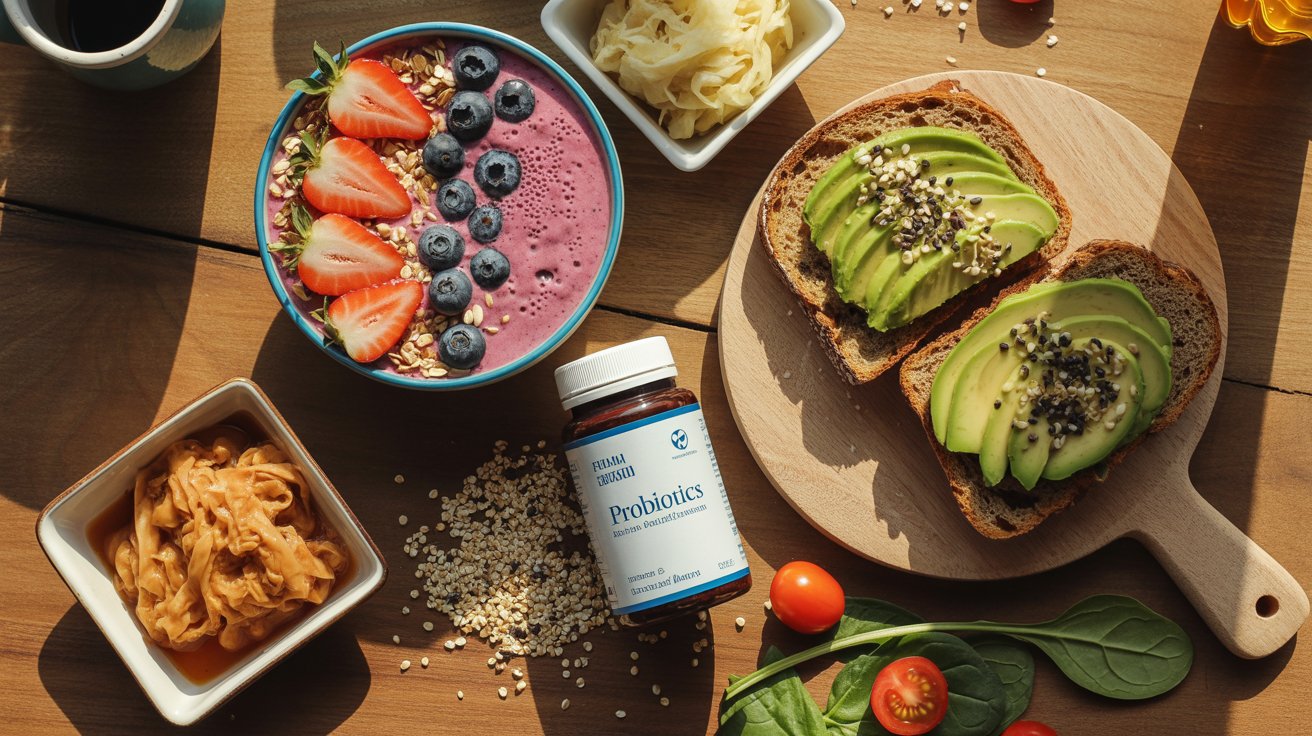
Nature’s original probiotic supplements, these foods are alive with beneficial bacteria.
Examples:
- Yogurt
- Kefir
- Kombucha
- Sauerkraut
- Kimchi
Pros:
- Provide probiotics in a natural food matrix
- Often contain additional nutrients
- Can be a delicious part of your daily diet
Cons:
- Probiotic content can vary
- May contain added sugars (especially in commercial yogurts and kombuchas)
- Some people may not enjoy the taste of fermented foods
Tip: Look for “live and active cultures” on the label of yogurt and other fermented dairy products.
Choosing the Right Form
The best form of probiotic for you depends on your lifestyle, preferences, and health goals:
- For convenience and precise dosing: Capsules or tablets might be your best bet.
- If you prefer to add probiotics to your food or drinks: Consider powders.
- For a whole-food approach: Incorporate a variety of fermented foods into your diet.
Remember, consistency is key when it comes to probiotics. Whether you choose supplements or foods, try to make them a regular part of your routine. And as always, if you have specific health concerns, consult with a healthcare professional to determine the best probiotic form and dosage for your needs.
Targeted Probiotics
While general probiotic supplements can support overall gut health, some are specifically formulated to address particular health concerns. Let’s explore some of these targeted probiotics:
Probiotics for Digestive Issues
These are the gut’s peacekeepers, designed to restore balance to troubled digestive systems.
Common targets:
- Irritable Bowel Syndrome (IBS)
- Inflammatory Bowel Disease (IBD)
- Antibiotic-associated diarrhea
Key strains:
- Lactobacillus rhamnosus GG
- Bifidobacterium infantis 35624
- Saccharomyces boulardii
Tip: For digestive issues, consistency is crucial. It may take several weeks of regular use to see significant improvements.
Probiotics for Immune Support
These probiotics are like boot camp instructors for your immune system, helping to train and strengthen your body’s defenses.
Benefits:
- May reduce the frequency and duration of common colds
- Could help manage allergies
- Potential to enhance vaccine responses
Key strains:
- Lactobacillus casei DN-114 001
- Lactobacillus crispatus
- Bifidobacterium animalis ssp. lactis BB-12
Tip: Combine immune-supporting probiotics with a balanced diet rich in fruits and vegetables for optimal results.
Probiotics for Women’s Health
These specialized probiotics focus on the unique needs of the female body, particularly vaginal and urinary tract health.
Common targets:
- Bacterial vaginosis
- Urinary tract infections
- Yeast infections
Key strains:
- Lactobacillus reuteri RC-14
- Lactobacillus rhamnosus GR-1
- Lactobacillus acidophilus
Tip: For vaginal health, look for probiotics that can be taken orally but are designed to populate the vaginal microbiome.

Selecting the Right Targeted Probiotic
Choosing a targeted probiotic involves considering your specific health concerns:
- Identify your primary health goal: Whether it’s digestive support, immune boosting, or women’s health.
- Look for clinically studied strains: Check if the product contains strains that have been researched for your specific concern.
- Consider CFU count: For targeted issues, higher CFU (Colony Forming Units) counts might be beneficial.
- Consult a healthcare professional: They can provide personalized recommendations based on your health history and current needs.
Remember, while targeted probiotics can be powerful tools for specific health concerns, they work best as part of a holistic approach to health. Combine them with a balanced diet, regular exercise, and stress management for the best results.
It’s also worth noting that the field of targeted probiotics is continually evolving. New research is constantly uncovering novel applications for specific probiotic strains. Stay informed and don’t hesitate to discuss the latest developments with your healthcare provider.
Selecting the Right Probiotic
With so many probiotic options available, choosing the right one can feel overwhelming. But don’t worry! We’re here to help you navigate the world of probiotics with confidence. Here are some key factors to consider:
Considering Specific Health Concerns
Your unique health needs should be the primary driver in your probiotic selection.
- For digestive issues: Look for strains like L. acidophilus or B. lactis.
- For immune support: Consider L. casei or L. rhamnosus GG.
- For women’s health: Strains like L. reuteri and L. rhamnosus are often beneficial.
Tip: If you have a specific health condition, consult with a healthcare professional for personalized recommendations.
Colony-Forming Units (CFUs)
CFUs indicate the number of viable bacteria in each dose. More isn’t always better, but it’s an important factor.
- General health maintenance: 1-10 billion CFUs per day is often sufficient.
- Specific health issues: Higher doses of 20-100 billion CFUs may be recommended.
Remember: CFU count at manufacture doesn’t guarantee potency at consumption. Look for products that guarantee CFU count through expiration.
Strain Diversity
A diverse probiotic blend can offer a wider range of benefits.
- Multi-strain products: Often provide broader spectrum support for overall gut health.
- Single-strain products: Can be beneficial for targeting specific issues.
Tip: For general gut health, look for products containing strains from both Lactobacillus and Bifidobacterium genera.
Additional Considerations
Don’t forget these other important factors:
- Shelf stability: Some probiotics require refrigeration, others don’t. Choose based on your lifestyle.
- Delivery method: Delayed-release capsules can help probiotics survive stomach acid.
- Prebiotics: Some products include prebiotics, which feed beneficial bacteria. These “synbiotic” formulations can enhance effectiveness.
- Quality and reputation: Choose products from reputable manufacturers who perform third-party testing.
- Allergens and dietary restrictions: Check for potential allergens and ensure the product meets any dietary needs (e.g., vegan, non-GMO).
Making Your Decision
Selecting the right probiotic is a personal journey. Here’s a step-by-step approach:
- Identify your primary health goal(s).
- Research strains that support those goals.
- Determine your preferred form (capsule, powder, food).
- Consider your budget and lifestyle factors.
- Start with a reputable, high-quality product.
- Give it time – probiotics often need several weeks to show effects.
- Keep a journal to track any changes in your health or well-being.
Remember, what works for one person may not work for another. Don’t be afraid to try different products until you find the one that works best for you. And always, if you have any underlying health conditions or concerns, consult with a healthcare professional before starting a new probiotic regimen.

Synbiotics: Probiotics + Prebiotics
Welcome to the dynamic duo of gut health! Synbiotics combine probiotics and prebiotics to create a powerhouse for your digestive system. Let’s break down this symbiotic relationship and see how it can benefit you.
What Are Synbiotics?
Synbiotics are a combination of probiotics (beneficial live bacteria) and prebiotics (food for these bacteria). It’s like providing a garden with both seeds and fertilizer – you’re not just adding good bacteria, you’re also creating an environment where they can thrive.
The Prebiotic Part
Prebiotics are typically non-digestible fibers that feed the good bacteria in your gut. They play a crucial role in synbiotics:
Common prebiotics:
- Inulin
- Fructooligosaccharides (FOS)
- Galactooligosaccharides (GOS)
- Resistant starch
Benefits of prebiotics:
- Promote growth of beneficial bacteria
- Enhance mineral absorption
- May improve insulin sensitivity
Tip: Many high-fiber foods naturally contain prebiotics, including garlic, onions, bananas, and whole grains.
Why Combine Probiotics and Prebiotics?
The synergy between probiotics and prebiotics can offer enhanced benefits:
- Improved probiotic survival: Prebiotics can help probiotics survive the journey through your digestive system.
- Enhanced effectiveness: Prebiotics provide fuel for probiotics, potentially making them more effective.
- Broader health benefits: The combination may offer more comprehensive support for gut health and overall well-being.
Potential Benefits of Synbiotics
Research suggests that synbiotics may offer a range of health benefits:
- Improved digestive health
- Enhanced immune function
- Better nutrient absorption
- Potential weight management support
- Possible reduction in inflammation
How to Incorporate Synbiotics
You have several options for adding synbiotics to your routine:
- Supplements: Many products now combine probiotics and prebiotics in a single supplement.
- Fortified foods: Some yogurts and other functional foods contain both probiotics and prebiotics.
- DIY approach: Combine probiotic-rich foods (like yogurt or kefir) with prebiotic-rich foods (like bananas or whole grains).
Remember: Start slowly when adding synbiotics to your diet. Some people may experience temporary digestive discomfort as their gut adjusts.
Choosing a Synbiotic Product
When selecting a synbiotic supplement, consider these factors:
- Probiotic strains: Look for well-researched strains that align with your health goals.
- Prebiotic type: Different prebiotics may have varying effects.
- CFU count: Ensure an adequate amount of live probiotics.
- Quality assurance: Choose products from reputable manufacturers.
Using Synbiotics Effectively
Synbiotics represent an exciting frontier in gut health. By combining the benefits of probiotics and prebiotics, they offer a comprehensive approach to supporting your digestive system and overall well-being.
As with any supplement, it’s wise to consult with a healthcare professional before adding synbiotics to your routine, especially if you have existing health conditions. They can help you determine if synbiotics are right for you and guide you in selecting the most appropriate product.
Remember, while synbiotics can be a valuable tool for gut health, they work best as part of a holistic approach that includes a balanced diet, regular exercise, and stress management.
Embracing the World of Probiotics for Optimal Gut Health
As we wrap up our journey through the fascinating world of probiotics, let’s recap the key points and look at the bigger picture of gut health.
Key Takeaways
- Diverse Probiotic Landscape: We’ve explored various types of probiotics, from Lactobacillus and Bifidobacterium species to the unique Saccharomyces boulardii. Each strain offers its own set of benefits.
- Various Forms: Probiotics come in multiple forms – capsules, powders, and fermented foods – allowing you to choose what works best for your lifestyle.
- Targeted Solutions: There are specific probiotics formulated for digestive issues, immune support, and women’s health, among others.
- Personalized Approach: Selecting the right probiotic involves considering your health goals, preferred form, and factors like CFU count and strain diversity.
- Synbiotics: The combination of probiotics and prebiotics offers a comprehensive approach to gut health support.
The Bigger Picture
While probiotics are powerful tools for gut health, it’s important to remember they’re part of a larger wellness strategy:
- Balanced Diet: A diet rich in diverse, whole foods provides the foundation for a healthy gut microbiome.
- Lifestyle Factors: Regular exercise, stress management, and adequate sleep all play crucial roles in gut health.
- Individualized Care: What works for one person may not work for another. Listening to your body and working with healthcare professionals can help you find your optimal approach.
Looking Forward
The field of probiotics is continuously evolving, with new research uncovering novel strains and applications. Staying informed about these developments can help you make the best decisions for your gut health.
Final Thoughts on The Different Types Of Probiotics
Embarking on your probiotic journey is an exciting step towards better gut health and overall wellbeing. Remember:
- Start slow and give your body time to adjust.
- Be consistent – probiotics often need time to show their full benefits.
- Don’t hesitate to experiment (safely) to find what works best for you.
- Consult with healthcare professionals, especially if you have specific health concerns.
Your gut is as unique as you are, and nurturing its health is a lifelong journey. With the knowledge you’ve gained about different types of probiotics, you’re well-equipped to make informed decisions about your gut health.
Here’s to your journey towards a happier, healthier gut!